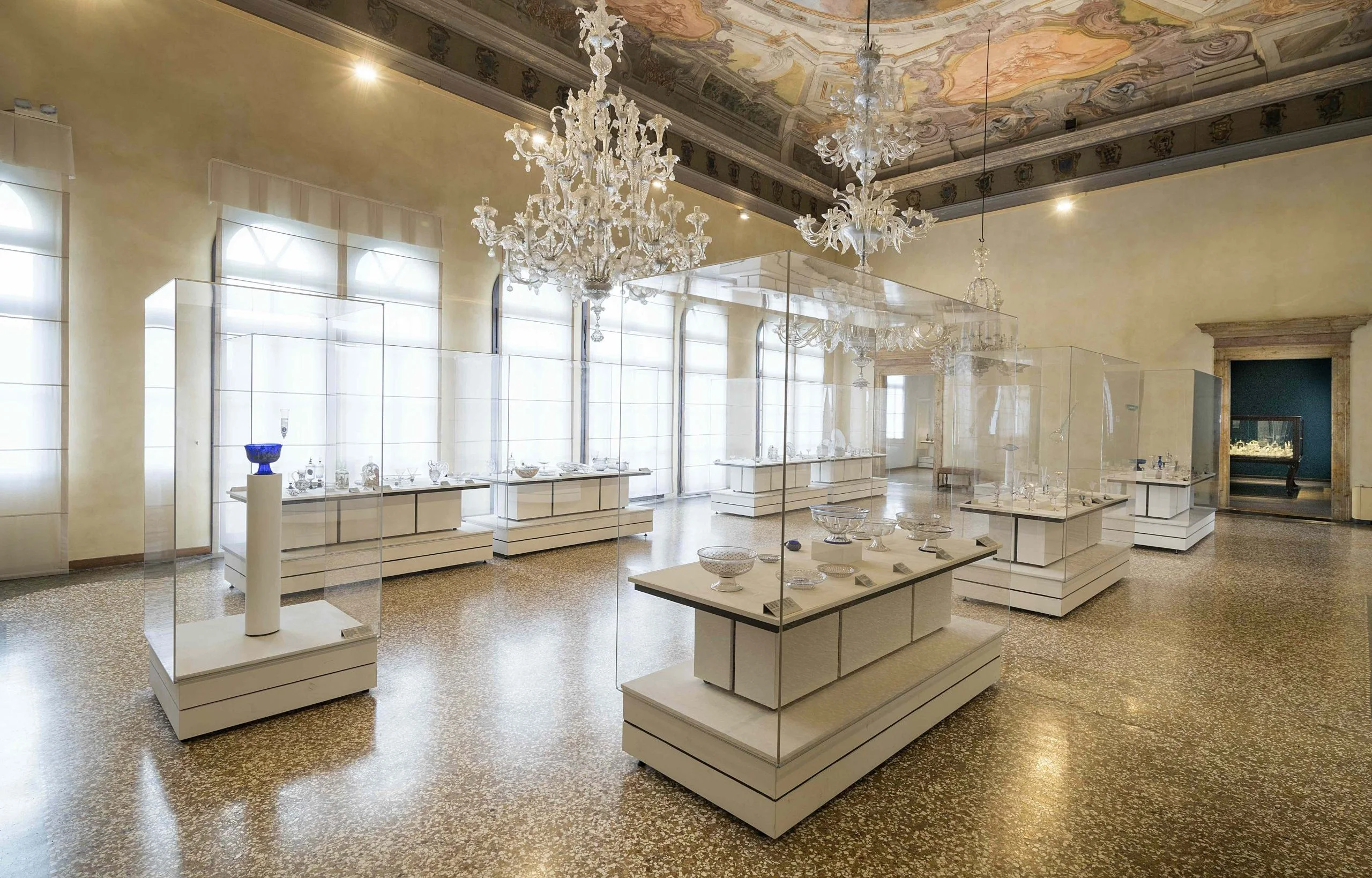
The Nineteenth Century: From Crisis to Revival
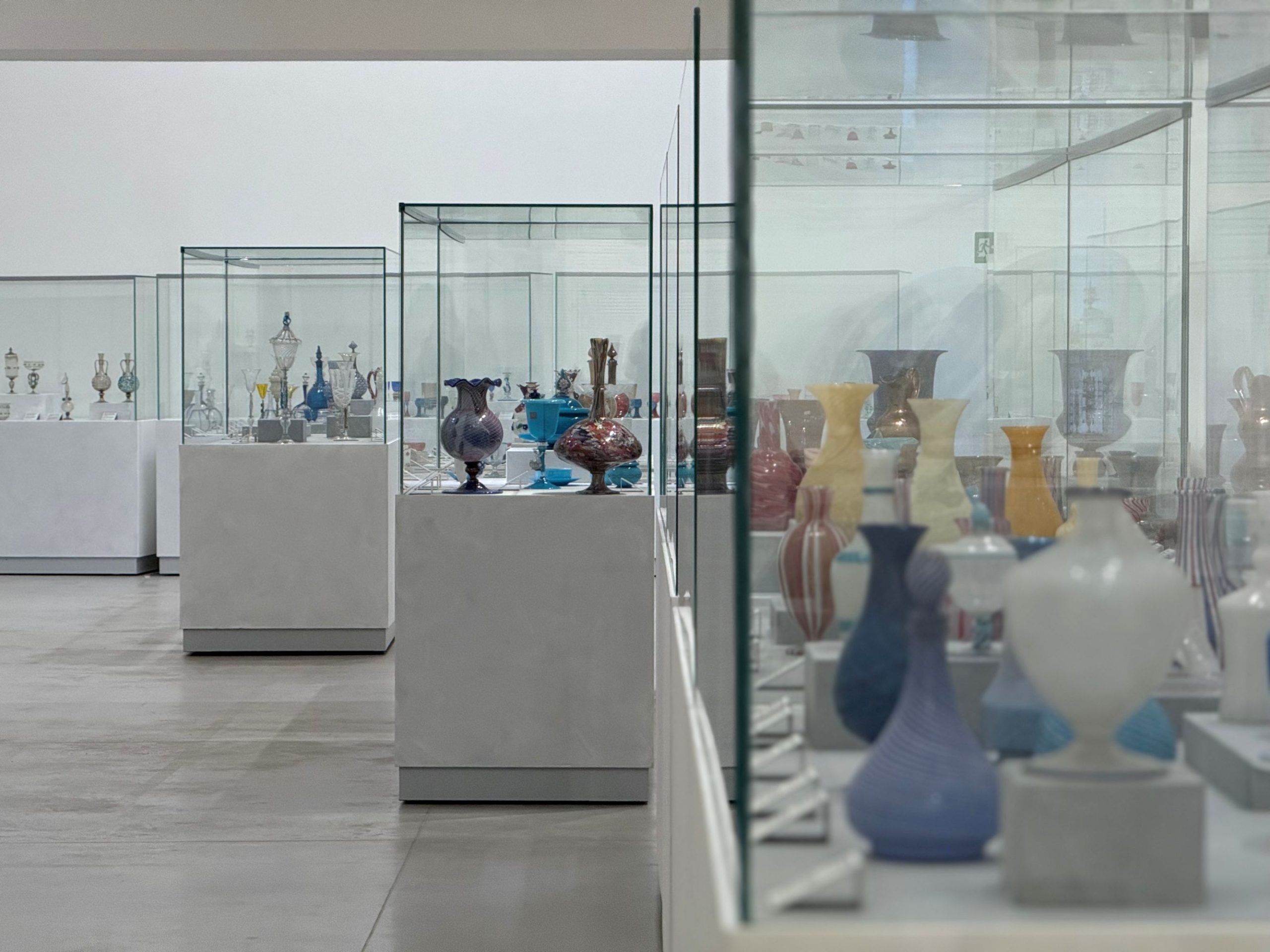
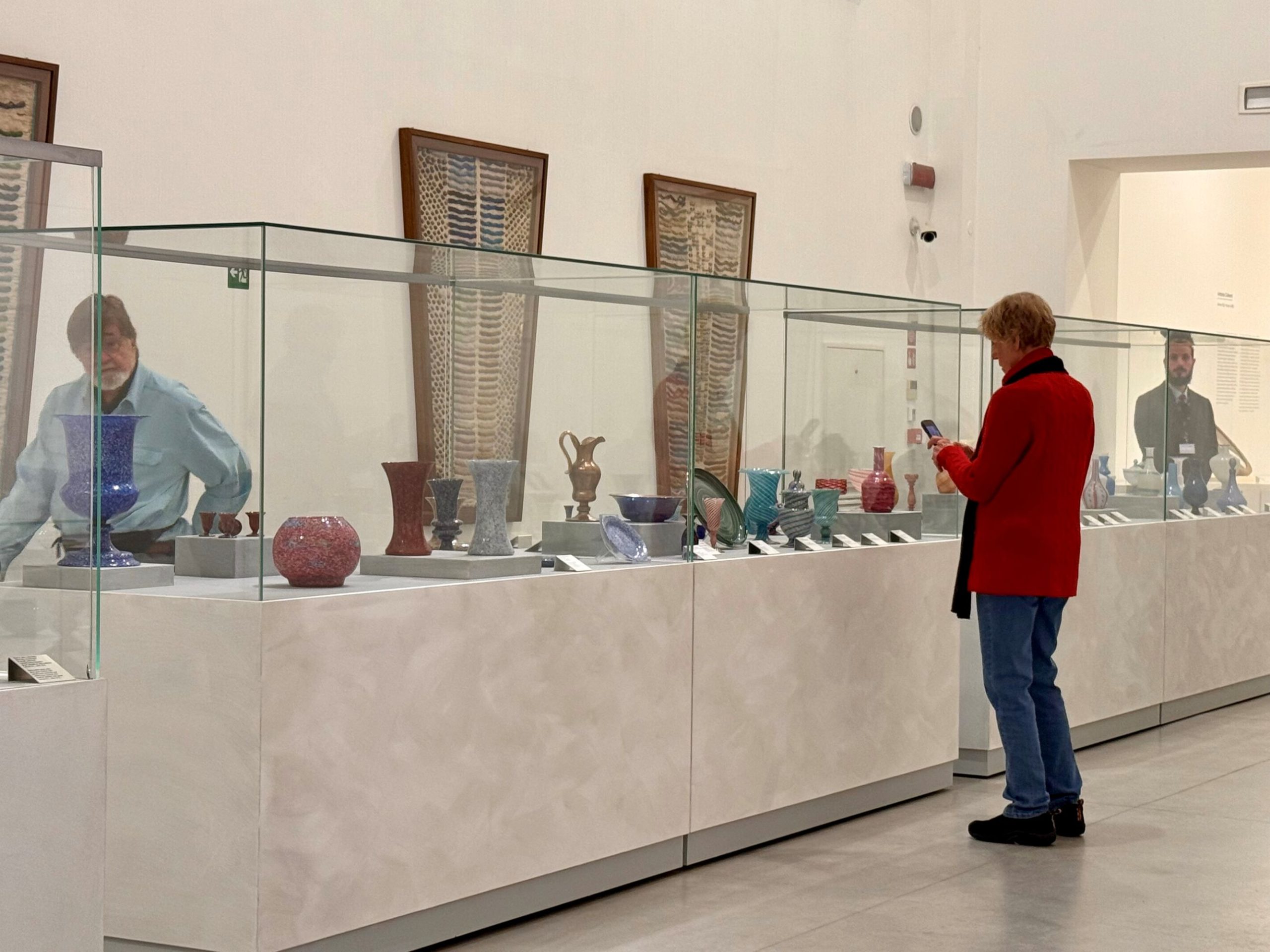
This permanent section of the exhibition path, housed in the former Conterie complex and open to the public since 2025, focuses on nineteenth-century glassmaking through several hundred items, many of which have never been exhibited before and were previously kept in storage.
The display chronicles the turbulent, captivating story of Murano glass production throughout the nineteenth century, from the severe crisis triggered by the fall of the Republic of Venice (1797) to the resurgence and full flourishing of the art form in the second half of the century, spearheaded by masters and entrepreneurs who leveraged their expertise to revive the island’s illustrious heritage.
Throughout the first half of the Nineteenth century, Venice suffered a severe downturn in industrial and commercial activities. Glassmaking was among the hardest-hit sectors, and artistic glass production ground almost entirely to a halt, largely due to shifting market preferences favoring Bohemian and English glass styles.
The earliest signs of revival appeared around the 1830s, alongside a renewed fascination with antique Venetian glassware among international collectors and museums. During this decade, entrepreneurs, technicians, and glass masters initiated the first documented attempts to retrieve traditional historic techniques and revive rare glass compositions.
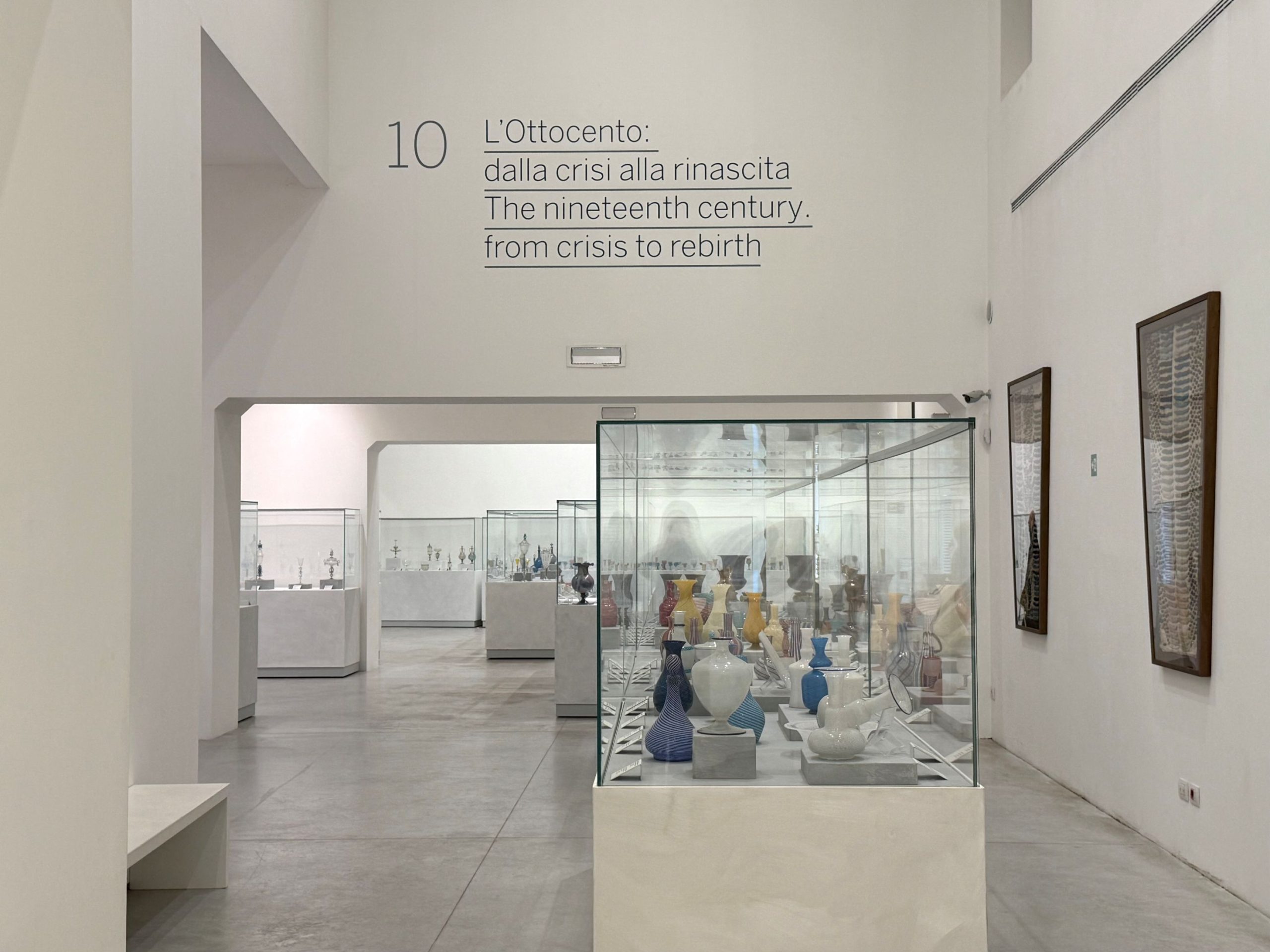
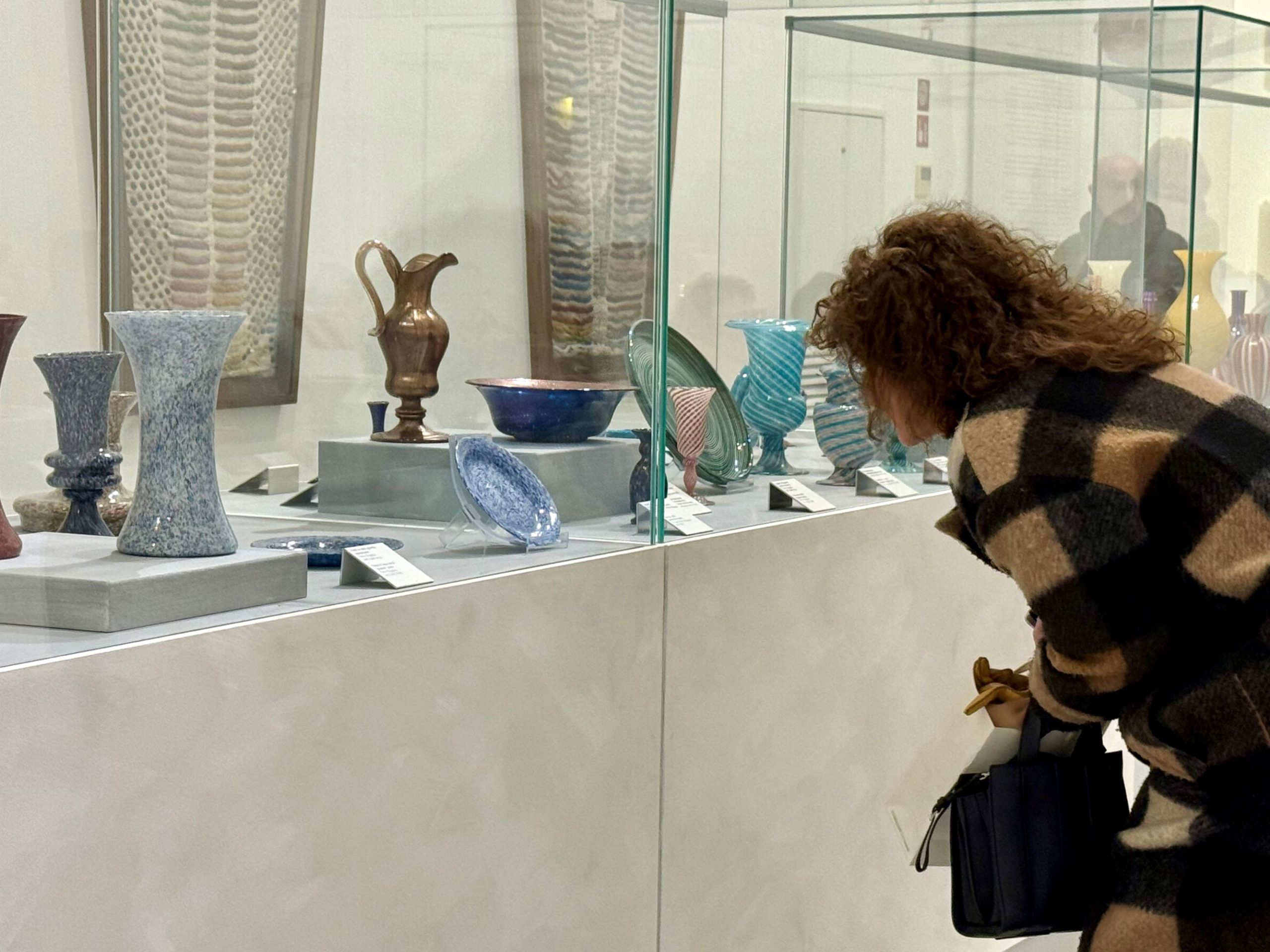
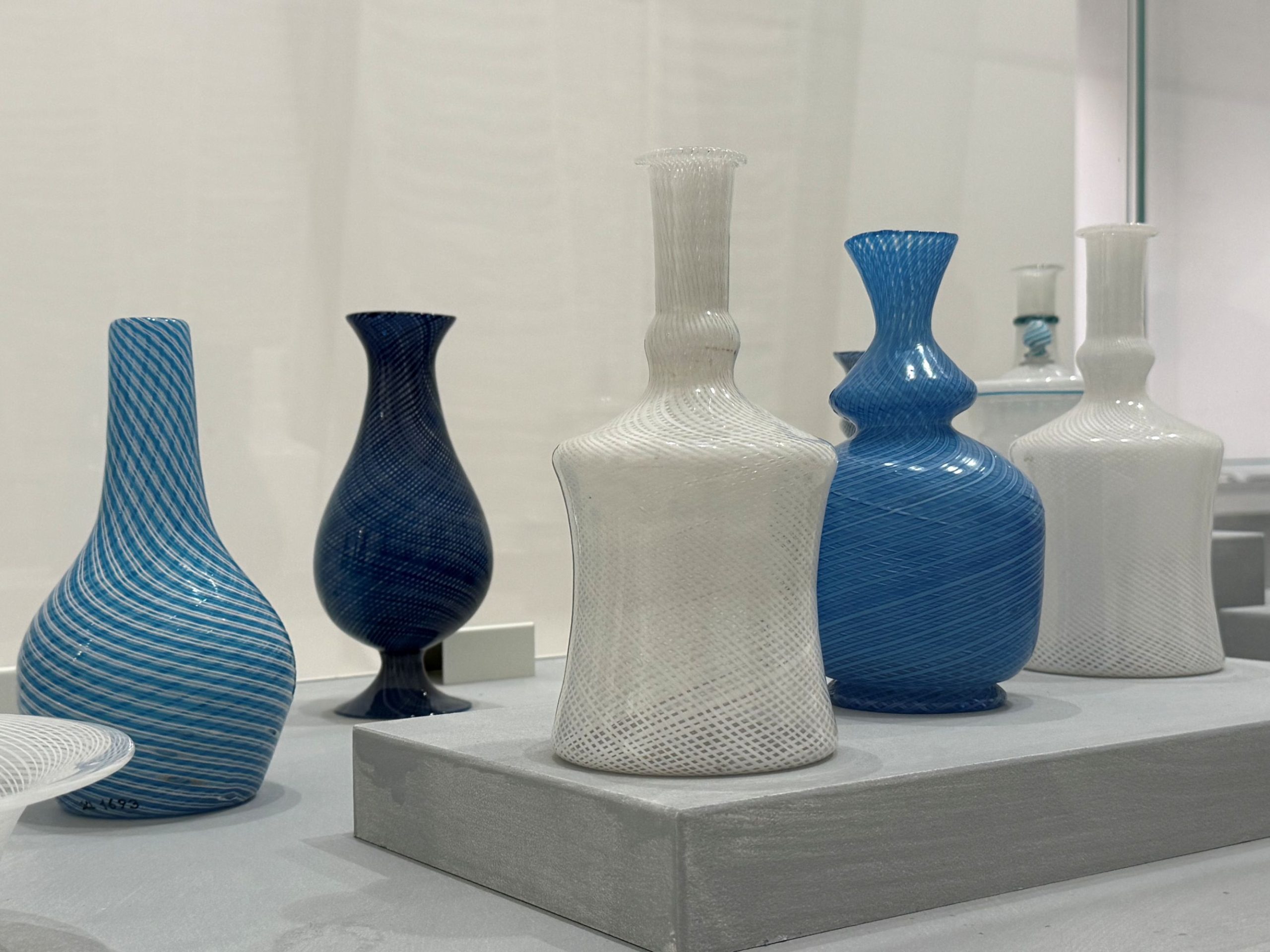
In 1838, beadmaker Domenico Bussolin became the first to reintroduce filigree blown glass (filigrana). He was soon followed, between 1845 and 1848, by Pietro Bigaglia, scion of an ancient Murano glassmaking family. Bigaglia is also credited with inventing vetro granito (granite glass), an opaque glass paste imitating natural granite, which he used to craft large neoclassical vessels. Many of these pieces were donated by Bigaglia himself to the Museo del Vetro in 1861, the year the museum and its archives were established. Meanwhile, in 1840 technician Lorenzo Radi revived gold-leaf mosaic techniques, and in 1856, after painstaking experiments, rediscovered the composition of chalcedony glass (calcedonio).
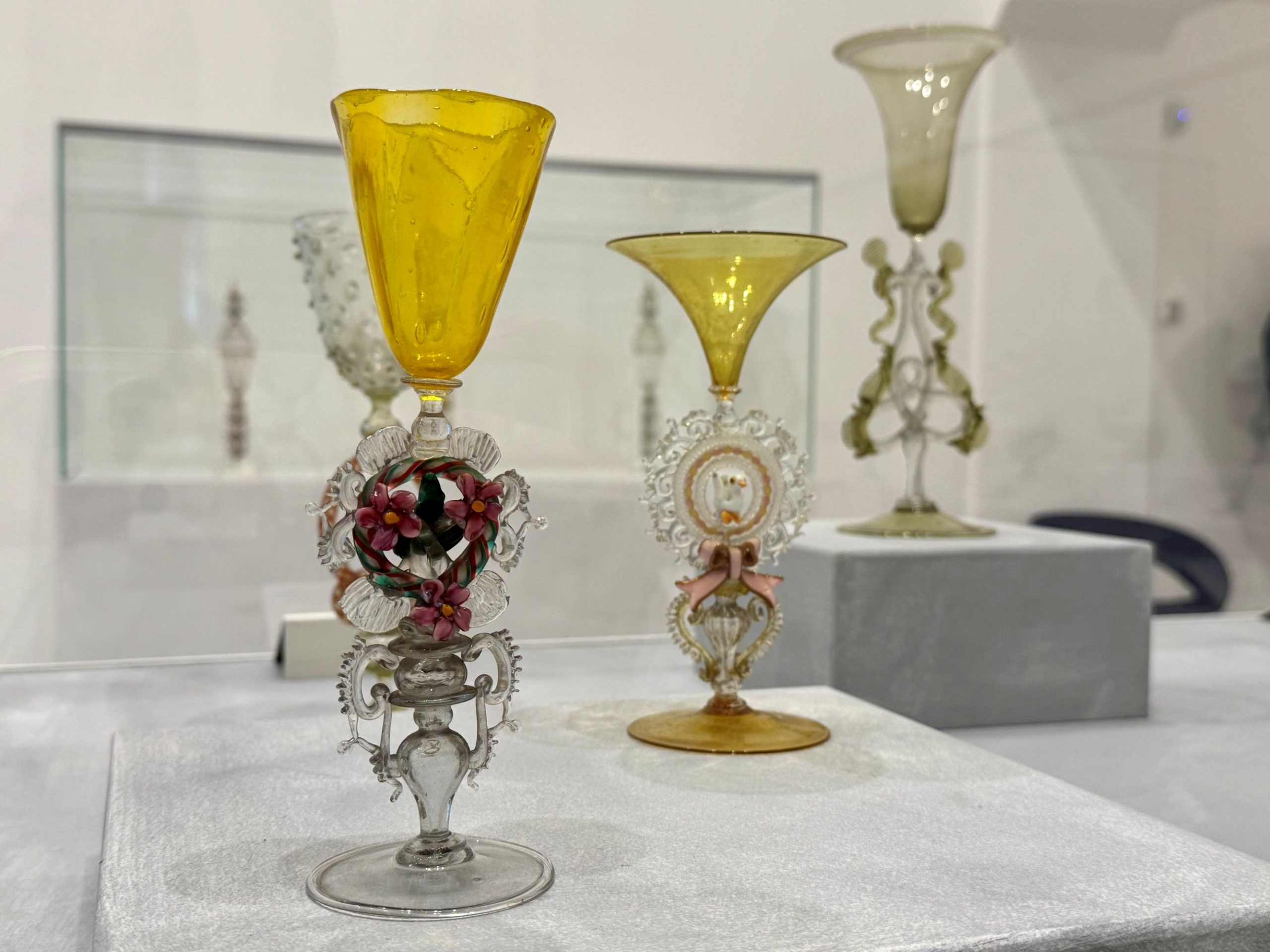
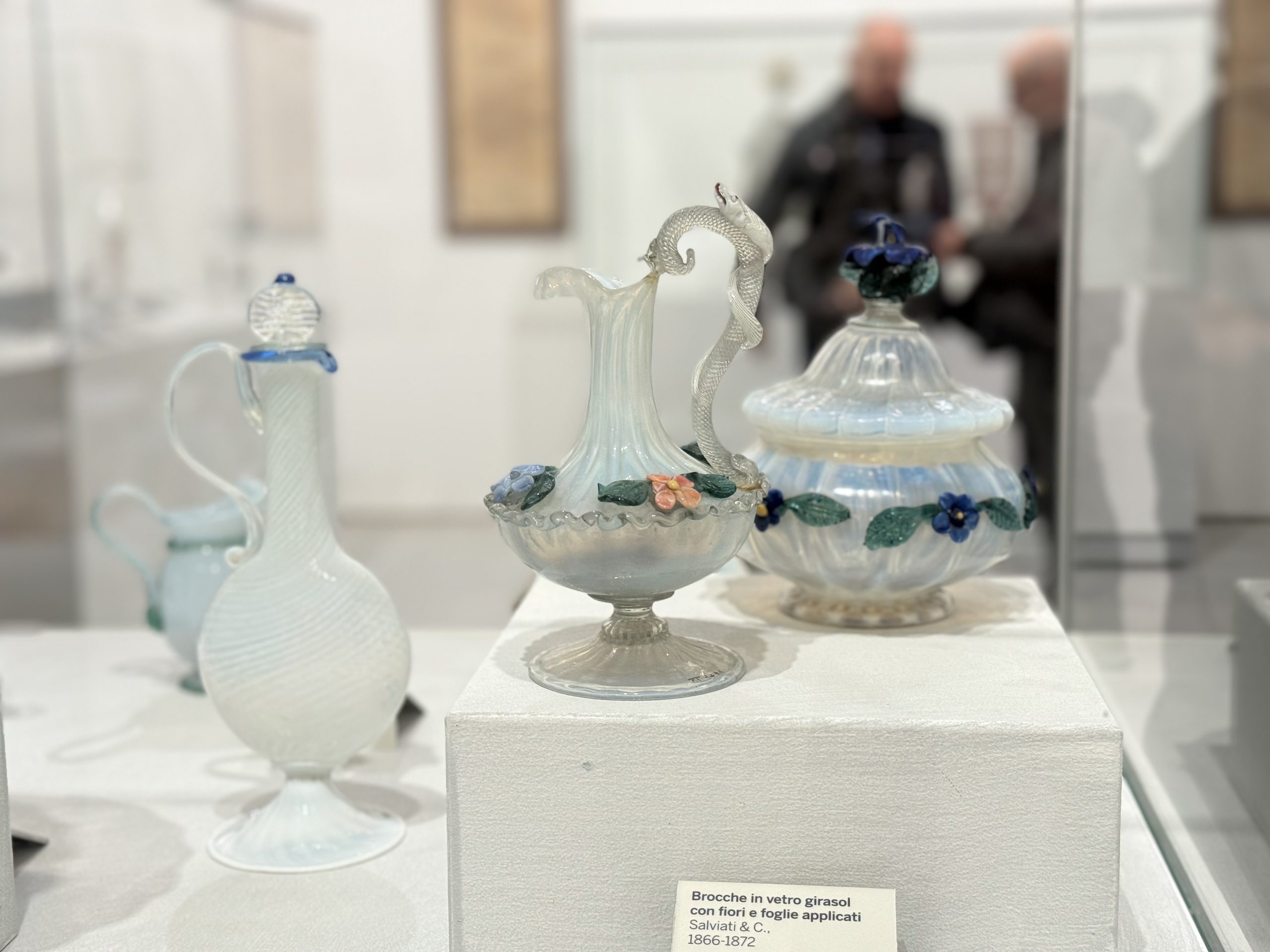
Following mid-century, artistic blown glass entered a decisive recovery. In 1854, Fratelli Toso was established, destined to become one of the most prominent glasshouses across the nineteenth and twentieth centuries. In 1859, Vicenza-born lawyer Antonio Salviati launched a mosaic manufactory in Venice. In 1866, Salviati founded a blown glass furnace that catalyzed the true resurgence of the craft, documented across the gallery by exquisite bowls, goblets, and decorative vessels. Salviati’s creations ranged from faithful replicas of Renaissance and Baroque models to imaginative reinterpretations enriched with vibrant polychromy and distinctively nineteenth-century ornamental details.
The layout also features a section dedicated to the revival of Roman and pre-Roman archaeological forms and techniques, which captured the attention of island workshops from the 1870s onward. The most celebrated technique was undeniably mosaic glass, or murrino, closely linked to master craftsman Vincenzo Moretti. Other glass types inspired by Roman antiquity included sgraffito gold-glass bases (fondi d’oro), cage cups (diatreta), and cameo glass. Miniature archaeological „Corinto“ vessels, featuring dark backgrounds or polychrome speckling accented with gold or silver leaf, were a signature specialty of the Francesco Ferro & Figlio furnace.
Galerie